








Kouskousi is more than a simple grain-based meal served across North Africa. It carries generations of tradition, family gatherings, and regional cooking styles that continue to shape local food culture today. In many homes, Kouskousi is connected to celebrations, Friday lunches, weddings, and religious occasions where large families gather around one shared dish. The preparation itself often takes time, patience, and experience, which is one reason the dish continues to hold emotional value in many communities. Although modern cooking methods have simplified the process, the traditional taste and communal spirit behind Kouskousi still remain strong.
The Historical Origins of Kouskousi
The history of Kouskousi goes back nearly two thousand years to the Berber communities of North Africa. Historians believe early versions of the dish were prepared using hand-rolled semolina grains that were steamed over slow-cooked meat and vegetables. Over time, the dish spread throughout countries such as Tunisia, Morocco, Algeria, and Libya, where each region created its own style and flavor profile. Trade routes and migration later introduced Kouskousi to Southern Europe and parts of the Middle East. Today, the dish is recognized worldwide as one of the most iconic foods connected to North African identity.
Many families still prepare Kouskousi using recipes passed down from grandparents and older relatives. Traditional preparation methods are considered an important part of preserving local culinary heritage. In rural areas, people may still hand-roll semolina grains instead of buying packaged couscous from stores. This process requires careful steaming and repeated fluffing to achieve the light texture associated with authentic Kouskousi. Even in modern cities, restaurants continue to promote traditional recipes to maintain cultural authenticity.
What Kouskousi Is Made From
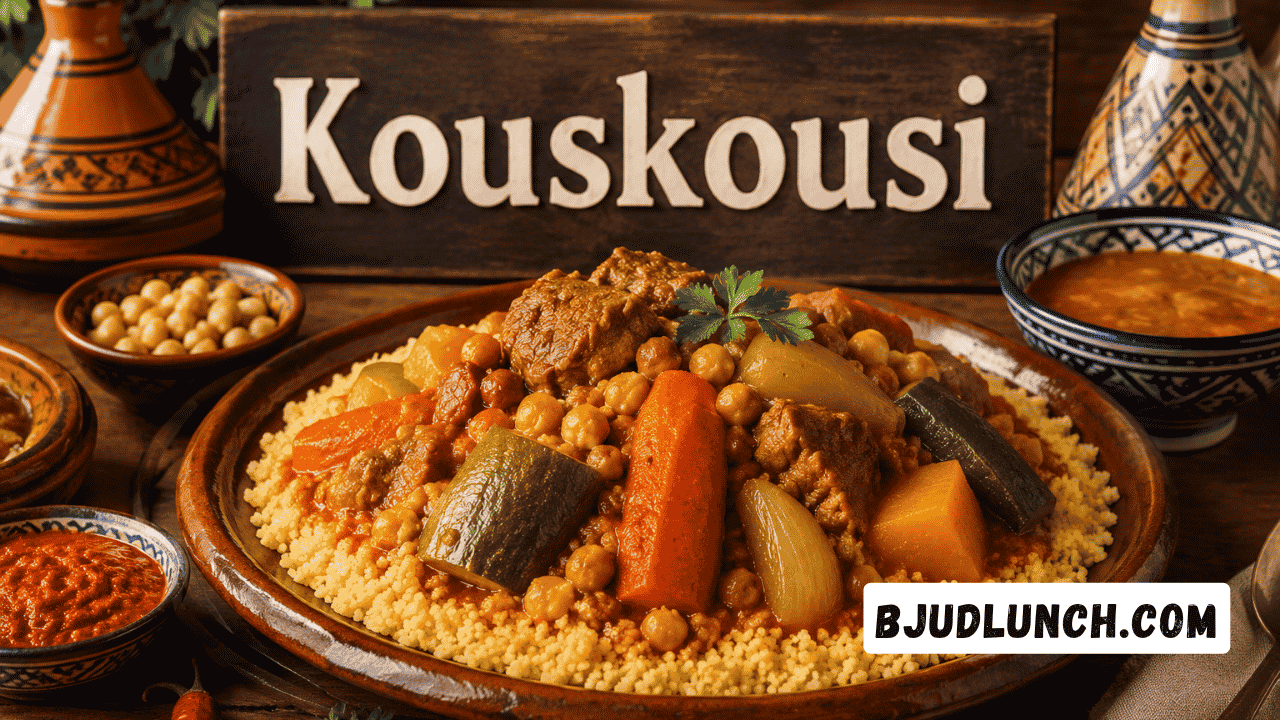
Kouskousi is mainly prepared using durum wheat semolina that is rolled into tiny granules and steamed until soft and fluffy. The grains absorb the flavors of broth, spices, vegetables, and meat during cooking, creating a rich and satisfying dish. Different regions may use slightly different ingredients depending on local farming traditions and seasonal produce. Some households prepare it with lamb, while others prefer chicken, fish, or vegetable-only versions. The flexibility of the dish is one reason it has remained popular for centuries.
Several ingredients are commonly found in traditional Kouskousi recipes:
- Semolina grains
- Chickpeas
- Tomatoes
- Carrots
- Zucchini
- Pumpkin
- Lamb or chicken
- Olive oil
- Harissa
- Cumin and coriander
The combination of these ingredients creates layers of flavor that make the dish both hearty and comforting. Tunisian versions are usually spicier due to the heavy use of harissa paste and chili peppers. Moroccan recipes often include sweeter flavor combinations with cinnamon and dried fruits. Algerian variations may focus more heavily on meat and slow-cooked broth. Despite regional differences, the foundation of Kouskousi remains closely tied to steamed semolina and rich stew.
Traditional Cooking Methods Used for Kouskousi
One of the most important parts of preparing Kouskousi is the steaming process. Traditional cooks use a two-part cooking pot called a couscoussier or kiskas. The stew cooks in the lower pot while steam rises into the upper section where the semolina grains slowly cook. This method allows the grains to absorb moisture without becoming sticky or heavy. Proper steaming is considered essential for achieving authentic texture and flavor.
Preparing Kouskousi by hand can take several hours depending on the recipe and serving size. The grains are usually sprinkled with water, rubbed by hand, and separated carefully before steaming begins. During the process, the couscous is removed multiple times for fluffing and seasoning. This repeated handling helps create the light and airy texture associated with traditional Kouskousi. Many experienced cooks consider patience more important than speed when preparing the dish correctly.
Modern kitchens sometimes use instant couscous to save time, but traditional methods are still highly respected. Many families believe authentic steaming creates better texture and richer flavor. Restaurants that specialize in traditional North African cuisine often advertise hand-steamed Kouskousi to attract customers looking for authentic meals. Food lovers also appreciate the slow cooking process because it allows spices and broth to fully develop. The preparation itself has become part of the cultural experience surrounding the dish.
Why Kouskousi Holds Cultural Importance
Kouskousi is deeply connected to hospitality and social gatherings across North Africa. Families often prepare large portions for guests during holidays, religious events, and celebrations. The dish is commonly served in one large plate placed at the center of the table, encouraging people to share the meal together. This communal style of eating reflects values of generosity, unity, and family connection. In many homes, serving Kouskousi to guests is considered a sign of respect and welcome.
Friday lunches are especially important in countries like Tunisia and Morocco where Kouskousi is treated as a weekly tradition. Relatives gather after prayers to enjoy a freshly prepared meal that may take several hours to cook. Children often grow up associating the smell of steaming couscous with family gatherings and special occasions. Because of this emotional connection, the dish carries meaning far beyond simple nutrition. It represents continuity between generations and preservation of cultural identity.
Some important occasions where Kouskousi is commonly served include:
- Weddings
- Religious holidays
- Family reunions
- Friday meals
- Community celebrations
- Traditional festivals
The strong emotional connection people have with Kouskousi explains why it continues to remain relevant even as global food trends change rapidly. Many younger cooks are now learning family recipes to preserve these traditions for future generations.
Regional Variations of Kouskousi
Different countries and regions have created their own versions of Kouskousi over the centuries. Tunisian Kouskousi is known for bold spices and tomato-based broth with harissa. The dish is often served with lamb, fish, or merguez sausage alongside vegetables and chickpeas. Coastal regions sometimes prepare seafood versions that include white fish or shellfish. These spicy variations are especially popular during large gatherings and festive occasions.
Moroccan styles of Kouskousi are often milder and may include sweet elements such as caramelized onions, raisins, and cinnamon. The balance between savory and sweet flavors is a defining feature of Moroccan cuisine. Vegetables are usually arranged carefully on top of the couscous to create an attractive presentation. Some recipes also include almonds or dried fruits for added texture and flavor. Moroccan versions are widely known in international restaurants and cooking shows.
Algerian and Libyan styles also bring their own characteristics to Kouskousi preparation. Algerian recipes often feature rich meat stews with strong spice combinations and heavier broths. Libyan versions may include regional herbs and simpler vegetable combinations depending on local ingredients. Despite these differences, the shared cooking traditions connect all these regional styles together. Each variation reflects local history, agriculture, and culinary identity.
Health Benefits of Kouskousi
Kouskousi can be a nutritious meal when prepared with balanced ingredients and fresh vegetables. Semolina provides carbohydrates that supply energy and help keep meals filling for longer periods. Chickpeas add plant protein and fiber, while vegetables contribute vitamins and minerals. When prepared with lean meat and moderate oil, the dish can fit into a healthy eating routine. The nutritional value depends largely on portion size and cooking style.
Some health-related benefits associated with Kouskousi include:
- Good source of energy
- Contains dietary fiber
- Provides plant-based protein
- Includes vitamin-rich vegetables
- Can support balanced meals
- Often lower in fat than fried foods
People who prefer vegetarian diets can also enjoy meat-free versions of Kouskousi prepared entirely with vegetables and legumes. This flexibility makes the dish suitable for different dietary preferences and lifestyles. Since the ingredients can be adjusted easily, home cooks often customize recipes according to nutritional goals. Traditional recipes remain popular partly because they combine comfort with wholesome ingredients.
How Kouskousi Became Popular Worldwide
The international spread of Kouskousi happened gradually through migration, trade, and tourism. North African communities introduced the dish to Europe, especially France, Italy, and Spain, where couscous became widely available in restaurants and supermarkets. Interest in Mediterranean and Middle Eastern cuisine also helped increase global popularity. Food travelers and chefs began exploring traditional North African dishes and sharing them internationally. As a result, Kouskousi gained recognition far beyond its original regions.
Today, many restaurants serve modern interpretations of Kouskousi alongside traditional versions. Some chefs experiment with seafood, roasted vegetables, or fusion ingredients while keeping the semolina base intact. Packaged couscous products have also made preparation easier for home cooks worldwide. Despite these modern adaptations, many people still value authentic recipes prepared using traditional steaming methods. The dish continues to bridge cultural traditions with contemporary cooking trends.
Conclusion
Kouskousi remains one of the most meaningful dishes connected to North African food culture and family traditions. Its long history, rich flavors, and communal style of serving have helped preserve its popularity across generations. From traditional Berber kitchens to modern international restaurants, the dish continues to evolve while maintaining its cultural identity. The combination of steamed semolina, slow-cooked broth, vegetables, and spices creates a meal that feels both comforting and deeply rooted in history. As more people discover traditional cuisines from around the world, Kouskousi continues to stand out as a symbol of hospitality, heritage, and shared meals.
FAQs
What is Kouskousi made from?
Kouskousi is mainly made from steamed semolina grains combined with vegetables, spices, chickpeas, and meat or fish depending on regional recipes.
Is Kouskousi the same as couscous?
Kouskousi is closely related to couscous and is often considered a regional or traditional variation connected to North African cuisine.
Which country is famous for Kouskousi?
Tunisia is especially known for spicy Kouskousi dishes, although Morocco, Algeria, and Libya also have strong couscous traditions.
Is Kouskousi healthy to eat?
Kouskousi can be healthy because it includes vegetables, fiber, protein, and steamed grains when prepared with balanced ingredients.
How is traditional Kouskousi cooked?
Traditional Kouskousi is steamed in a special two-part pot where broth cooks below and semolina grains steam above until fluffy.